
West Bali National Park – Lianna Trail. 3 km.
Hiking in Bali in +30 degree heat is a bit different than hiking in our normal areas. We must always be accompanied by a ranger, which is good for several reasons. There are so many different things to look at, and the ranger can tell a lot of exciting things about what we see. The ranger can also look out for us if we meet wild monkeys, wild boars, varans or even snakes.
Our tour starts at the reception of Plataran Menjangan Resort & Spa. We meet with our guide and chief ranger Gede Muliada at 08:00 so we can hike before it gets too hot.
Gede says that as a child he spent a lot of time in the forest (he was born and raised in the area) and that he found some of his food in the forest. He left school early, but was fortunate to be employed at Plataran, where he has now worked his way up to chief ranger. He understands how important it is to take care of nature, and that it is also important to give the locals insight and knowledge so that they also help to take care of the environment. Therefore, Plataran also does activities for the benefit of the locals. They shop locally, they feed schools and they make sure fishermen and farmers learn how to contribute to nature rather than degrade it while improving their own standard of living. In just one generation, many of the locals have succeeded in creating significantly improved living conditions and at the same time improving the opportunities for their children to receive a better education.
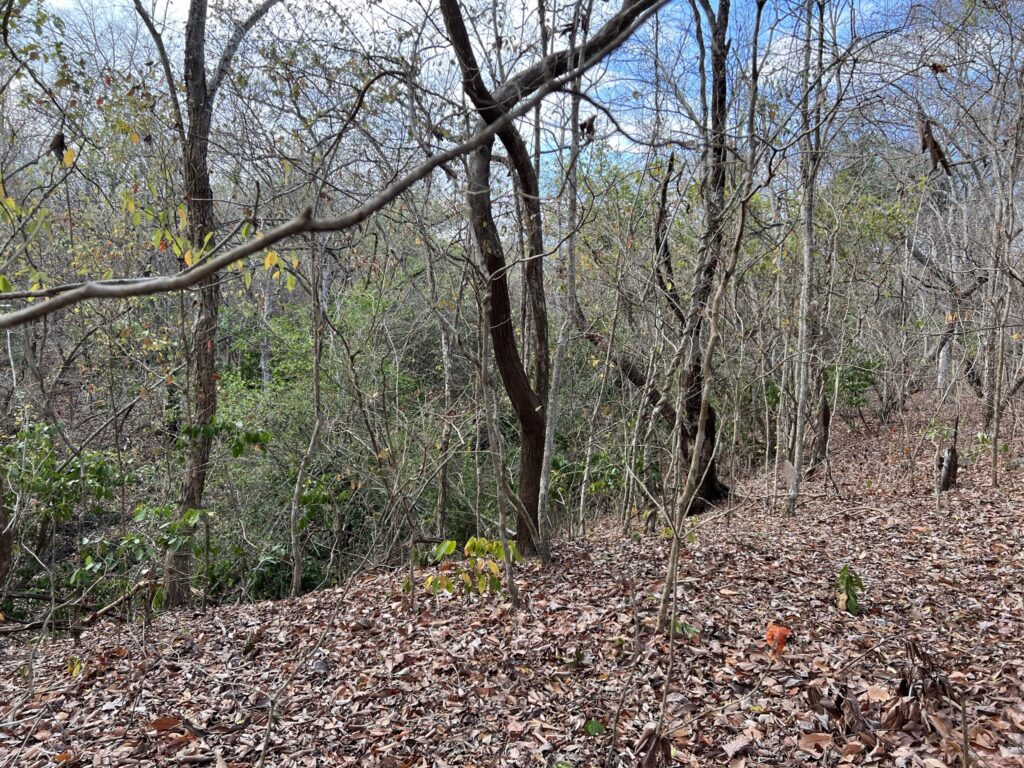
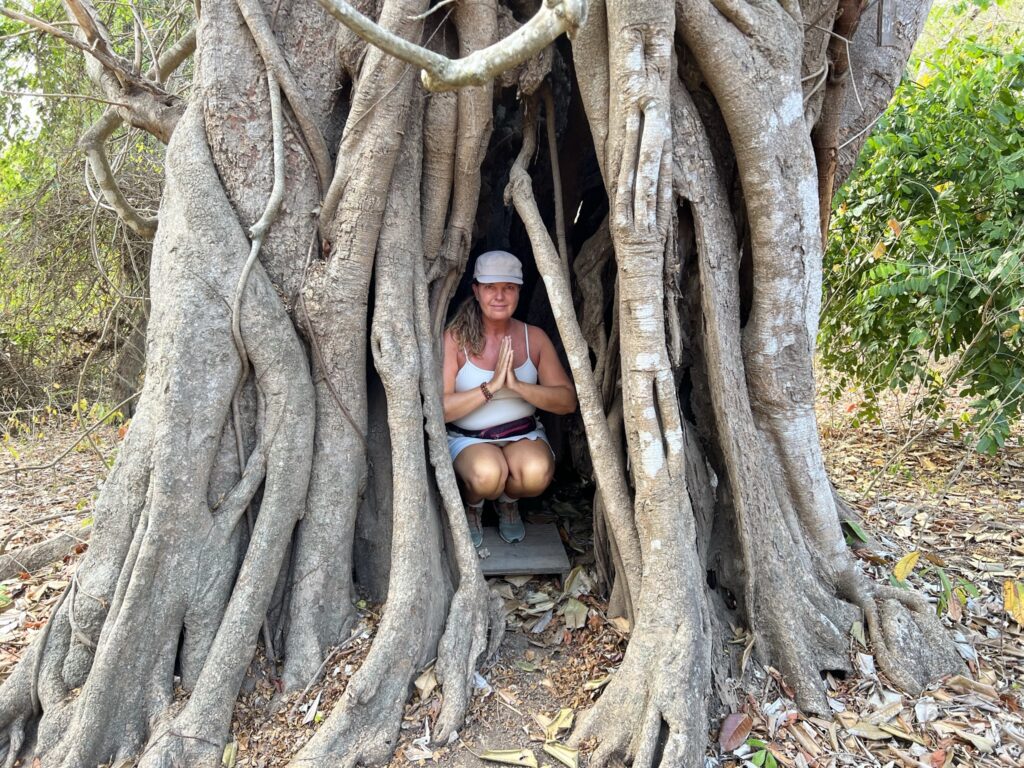
We start by walking on a beautiful winding forest path, where we enjoy the birdsong and listen to the sounds of the forest. We quickly get up a little in the terrain, and are told that the big depression we can see is like a big river during the rainy season. We pass a funny-looking tree, where the roots have kind of encircled the middle of the tree. The tree is a meditation tree, and is used by locals to sit in and meditate.


We haven't gone much further before we see a bigger snail house on the path. Our ranger tells us that the snails have a rather special way of surviving the dry period. Before the dry period begins, the snail lays its eggs in its own house, after which it closes the entrance from the inside with a membrane, and then goes into hibernation for up to 6 months. Then, when the rainy season begins, the snail comes out and lays its eggs in hiding places where they are not eaten.
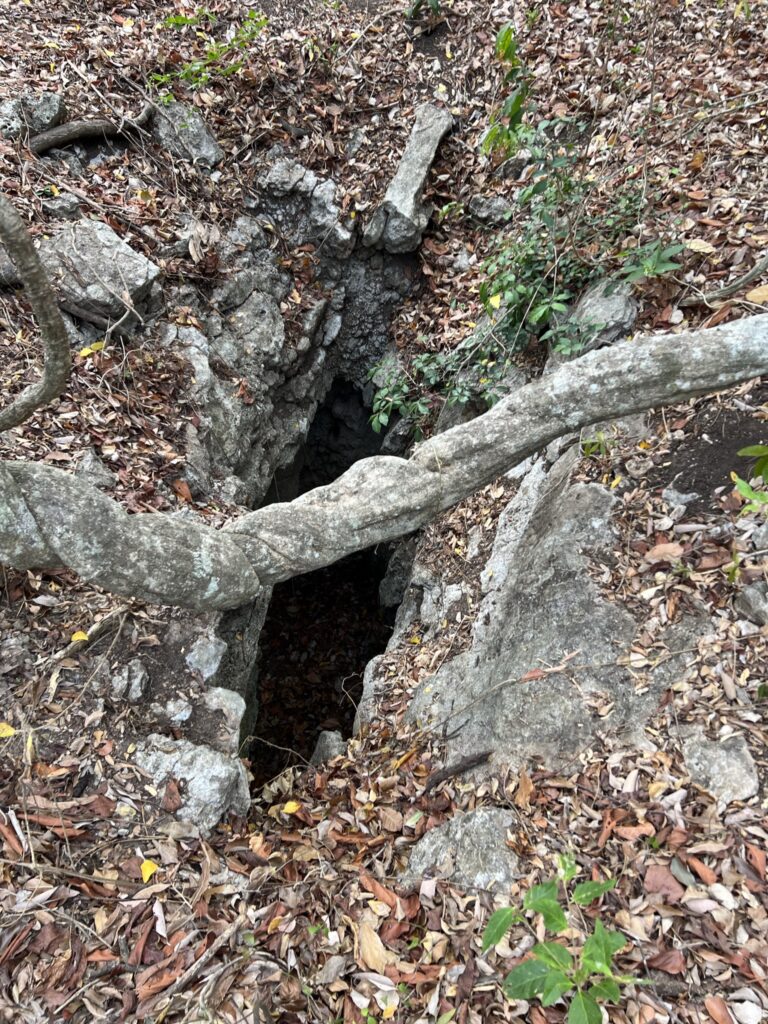
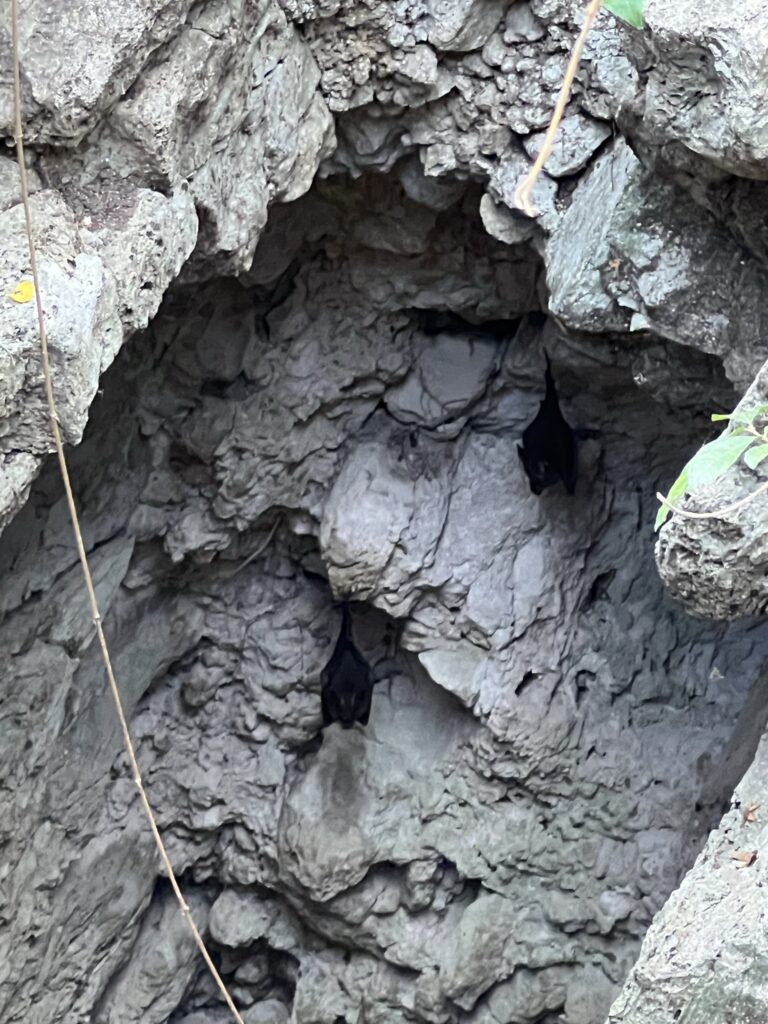
Thus, wiser about yet another of the many animal species, we go further. We must constantly look down, as the path is filled with long thin lianas and vines, which can easily trap an inattentive hiker. We have now set course for bat cave, or bat cave. The cave is an underground cave with 2 entrances right next to each other, but with a very large underground cave that we cannot see. Our ranger tells us that there are usually no guests out to see the cave, as the bats should not be disturbed, but we are lucky to get a look down into the cave. Here we can see the little bats hanging and sleeping.


We continue along a dried-up stream, which during the rainy season is full of water. We can see how lava and corals mix underground. When we see a recently dug hole in the ground, we guess that it is wild boar that made the hole, but our guide tells us that it is a Landak, which is an Indonesian hedgehog that, among other things, eats the roots of these kinds of trees.
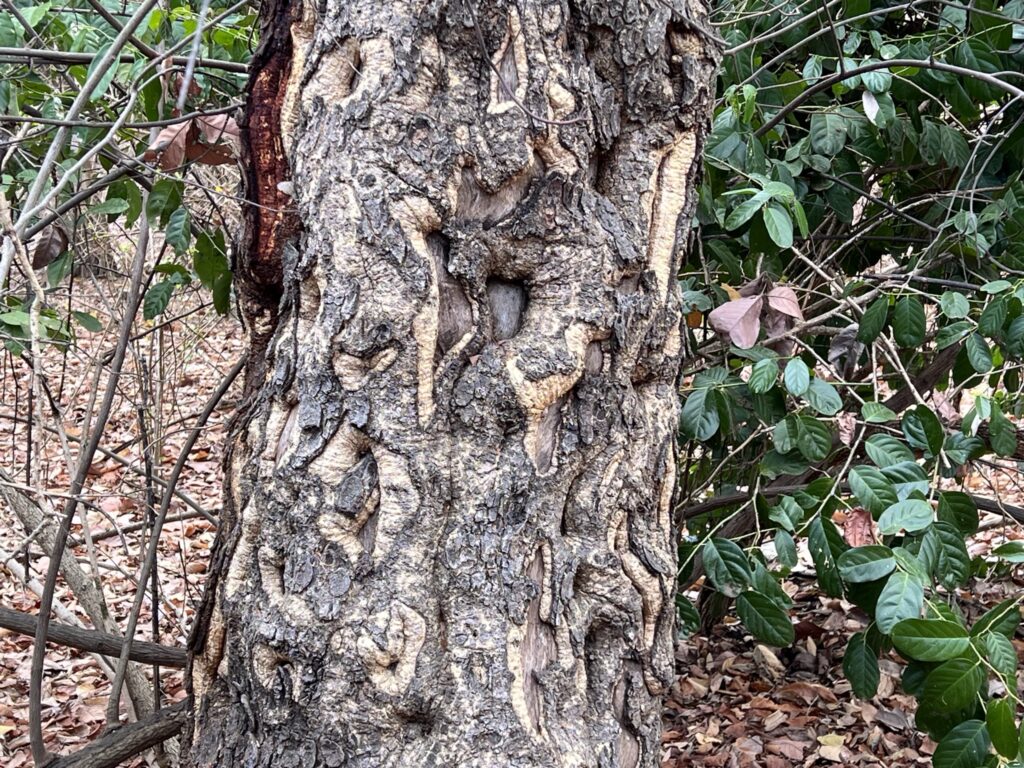
The monsoon forest is quite dry and we can see that it will be good for the forest animals that there will be rain soon. However, there are still some evergreens and trees. Among other things, we walk past several very green mandarin trees, where the fruits also hang. The only animals that currently benefit from these trees are the ants, which draw sugar from the peel of the fruits. Later, when the fruits ripen, the wild monkeys will come by and take the fruits. Several of the trees have a very distinctive bark with large holes and in light and dark colors. This is because the big squirrels (Giant Squirrel) eats of the bark. Fittingly, we also get to see a specimen of this great squirrel.
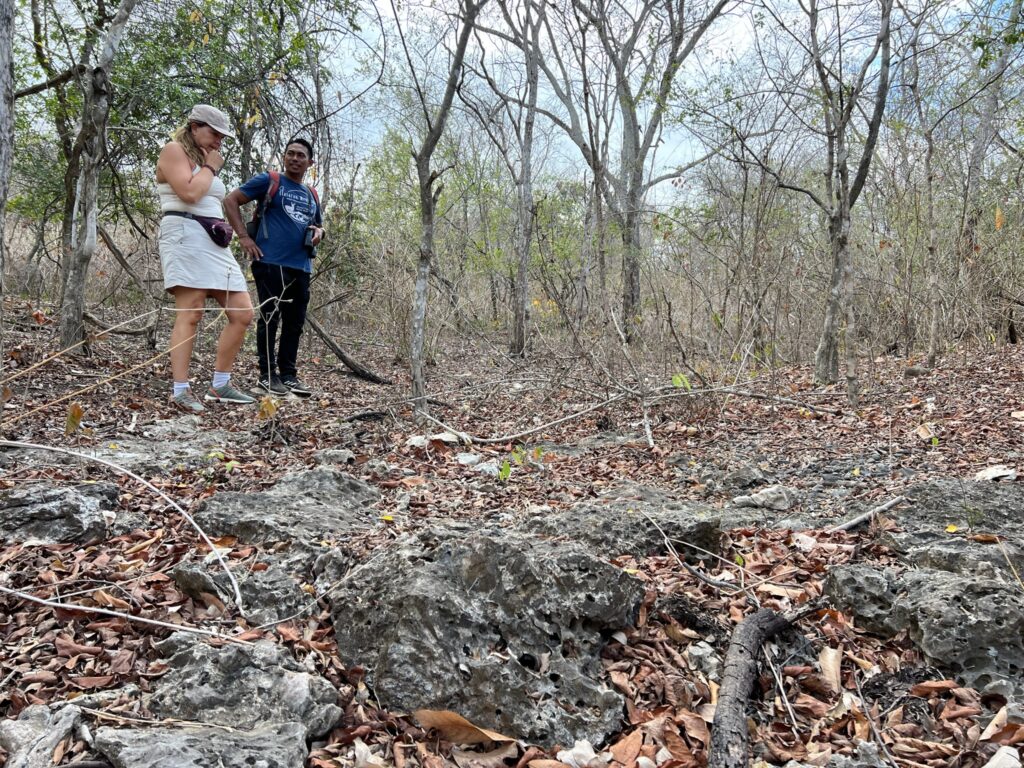


We now move into a part of the monsoon forest, where a lot of lianas grow, and our guide immediately christens the piece Lian-stræde. Lianas are a creeper that uses other plants to grow up, as the liana does not have enough strength to sustain itself. Lianas are elastic, so even though they grow around their support plants, they are also elastic, so they can expand as the support plant grows. When there are many lianas in an area, then it is a sign that the monsoon forest is healthy. Lianas seek high up for light, and the lianas bloom just before the rainy season begins. The local farmers therefore look for when the lianas bloom – then they know when they can start sowing their land. The lianas are very strong, and our guide shows us that they can easily carry him.
The beautiful path continues, and we talk about how the expression that the monsoon forest has now is completely different if the walk is hiked after the rainy season, where everything will be green and lush. The rainy season is anticipated by many of the forest's animals, as it becomes easier to find food when everything is green. However, there is one animal that is challenged during the rainy season, and that is the bee. The sometimes heavy rain is a challenge for the bees, who need places to seek shelter. They use hollow trees in the forest, but it has been necessary to help, and therefore Plataran has created a whole program, which includes that guests can help make bee houses.
We pass a place where there are a few very strange-looking trees, where it looks like there are several trees that have grown together. Gede tells us that the tree is a Ficus Superba, which is characterized by the fact that the original trunk quietly dies, but that the tree sends new roots down from the branches to support, but also so that the tree can live on. Some pretty funny trees come out of that.


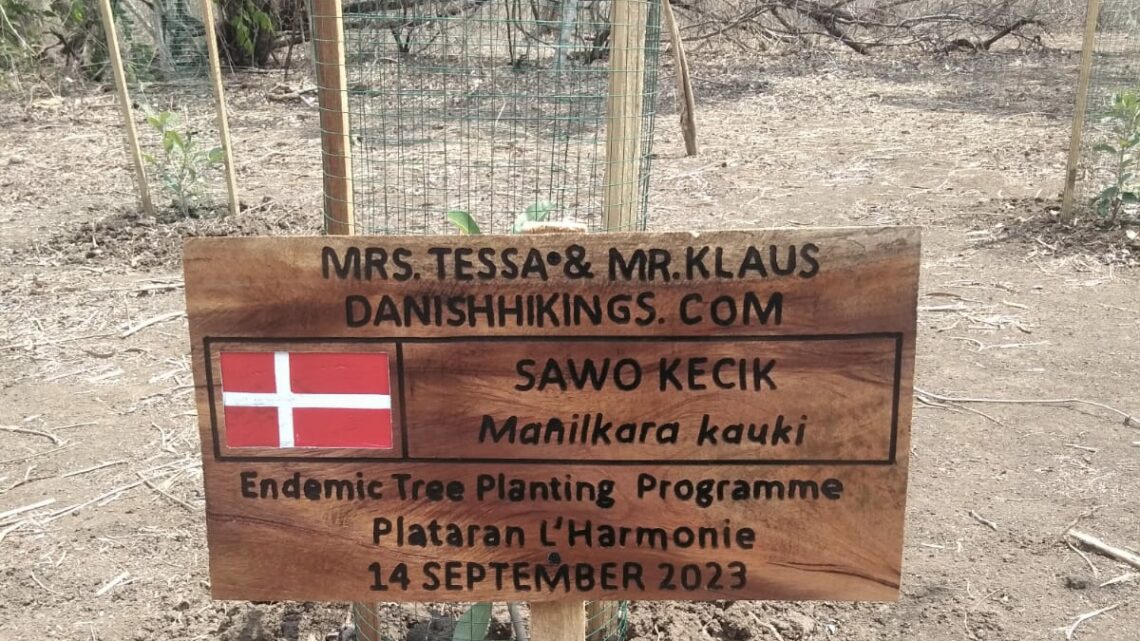
We can constantly wonder how something so dry can grow again when it gets water, but we can see that some evergreens and trees get enough nourishment, while others just "go into hiatus". After walking for about 2 hours and less than 2 kilometers, we will reach the highlight of this tour. We will plant our own trees in the monsoon forest, and we will thus help maintain this wonderful national park. Again, it is part of Plataran's program to make a difference for nature, culture and community. We have previously helped plant mangrove forest, but planting our own trees in the monsoon forest is really special. The trees we plant are called Sawo Kecik, and they bear some red fruits, which especially the monkeys love. The trees are fostered by our guide in his own small nursery in the monsoon forest, because as he says, it is important that no new vegetation is brought into the sensitive ecosystem that they protect.

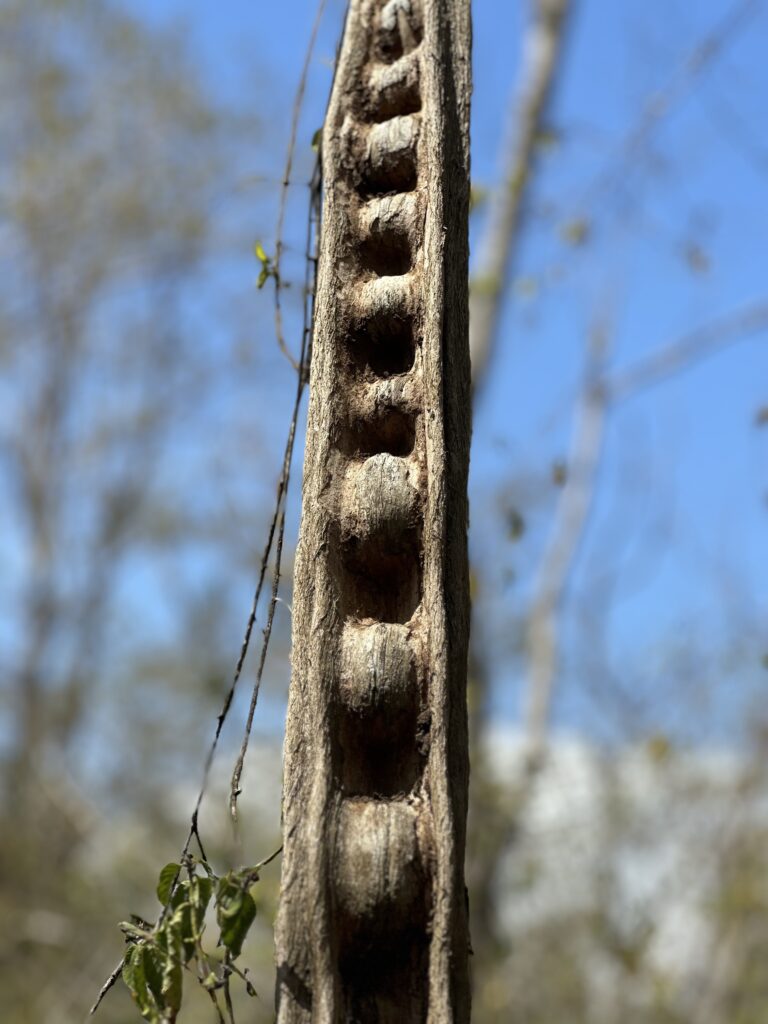
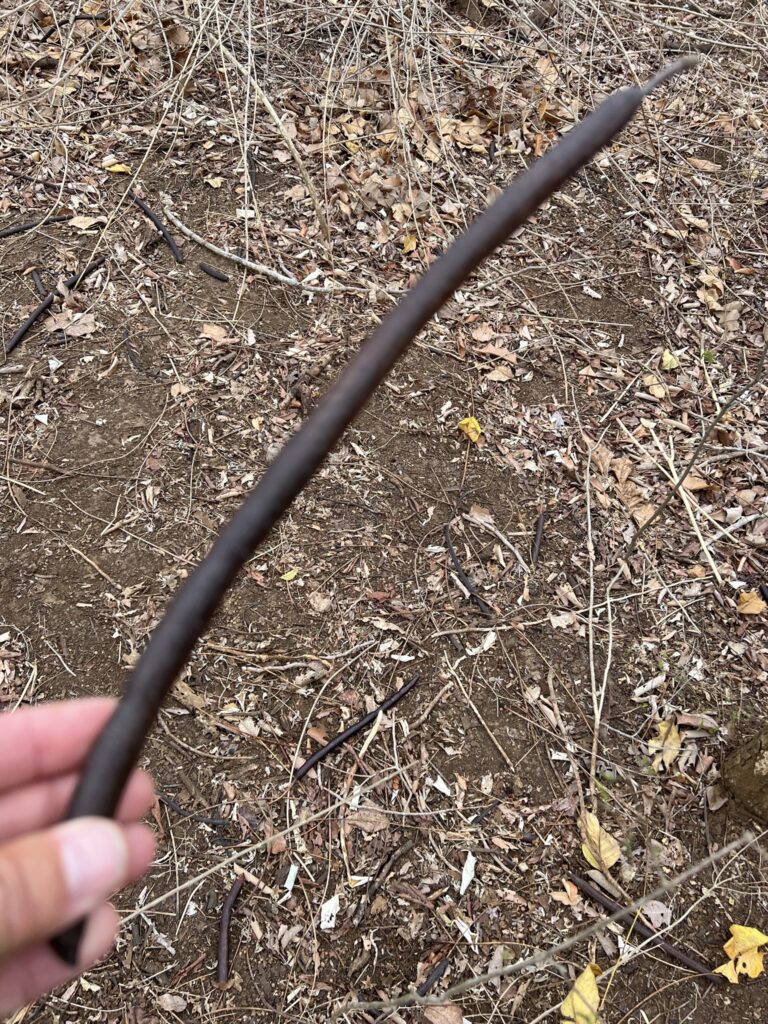
After setting the three new trees (and having a good reason to come again in a few years), the tour continues along the beautiful trails. Our guide stops and picks up a stick about 20 cm long from the ground. It turns out that it is a seed stand from a tree, and when we open the shell we can see that it is filled with new seeds. It shows us how the individual trees multiply in different ways.
Just before we end our trip, we pass by a very special place – we have managed to find the exact place where 2 time zones change, and we actually manage to get a picture of two phones next to each other, but where there is an hour difference.
We finally pass by a large green cage, which has previously been used to have Bali Starling couples in before they are released into the wild. A Bali Starling chooses his life companion from young bird and they are together for life. If one dies, the other does not get along with a new mate. If one of the adult birds dies within the first 2 weeks of a young, the young also die.
Gede tells us that we have been accompanied by a few Bali Starling throughout our trip, which we have talked about several times. He also says that in Bali it means eternal friendship/love with whoever you go with.


The trip is barely 3 kilometers long, but takes about 2.5 hours with all the info and tree planting.
Click on the map below and it will open in Google Maps. From here, you can follow the route as you are hiking.
